Whose Cambridge? Christ’s College Library+ Judicial Review, case AC-2025-LON-004656
Cambridge’s historic centre belongs to everyone, not only a college that happens to own a corner of it. Its heritage: the historic buildings and iconic skyline, the narrow streets and protected conservation areas, is held in trust for the whole city. Planning law and the bodies that guard heritage exist to check any college tempted to build on a scale that harms the very heritage it shares with the rest of the city. Gown cannot be allowed to forget that it answers to town.
Christ’s Lane is one of Cambridge’s oldest pedestrian routes; a narrow passage, barely six metres wide, that has carried the city’s foot traffic for centuries, today linking the historic core to the bus station and the Grafton. On one side stands the Grade I listed Bodley Library, Victorian, human-scaled, its perfectly proportioned gable, oriel window and crenelated staircase turret currently visible against clear sky from along the lane.
Christ’s College wants to build a library so large that the experts who reviewed it found it caused heritage harm: a four-storey building fourteen metres high along that same six metres of width, its façade largely blank, looming over the Bodley and turning its back on the town. Planning officers once warned that buildings of such dimensions would turn Christ’s Lane into a “canyon-like, oppressive passageway.”
Every building that has stood here has deferred to the Bodley beside it. This one would not.
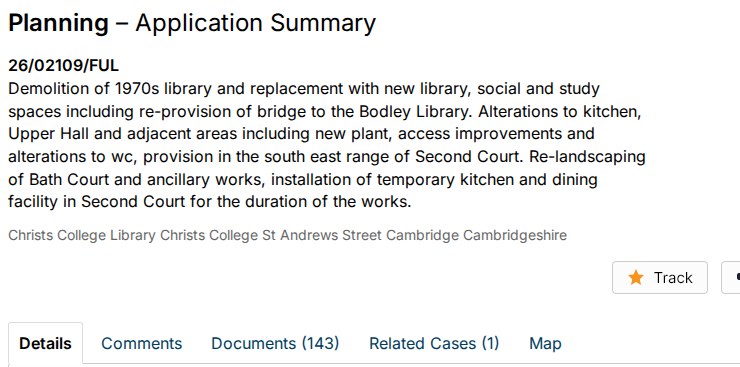
Take action : 26/02109/FUL
Object Now
Two minutes is all it takes. A formal objection goes on the planning record. The Council accepts comments until the application is decided.
Not sure what to say? A few lines are enough, use your own words. For example:
“I object to application 26/02109/FUL. The College and the Council conceded in Court that the first permission was unlawful; the errors they admitted include that heritage harm was not treated correctly. A number of heritage bodies have found the building too big and bulky, causing harm to the Bodley Library and other Grade I listed surroundings. Nothing substantive about the second application has changed. The High Court hears the judicial review on 20 October 2026, and the application should not be determined before the Court has ruled on how to correct the errors conceded.”
What we are asking for. We support a new Christ’s College Library; we oppose this design. The benefits to the public are small; the harm to the city’s heritage is not. Cambridge deserves better from Christ’s College: a building that serves the city and respects its historic setting.
Why object
Six reasons this scheme should not be approved
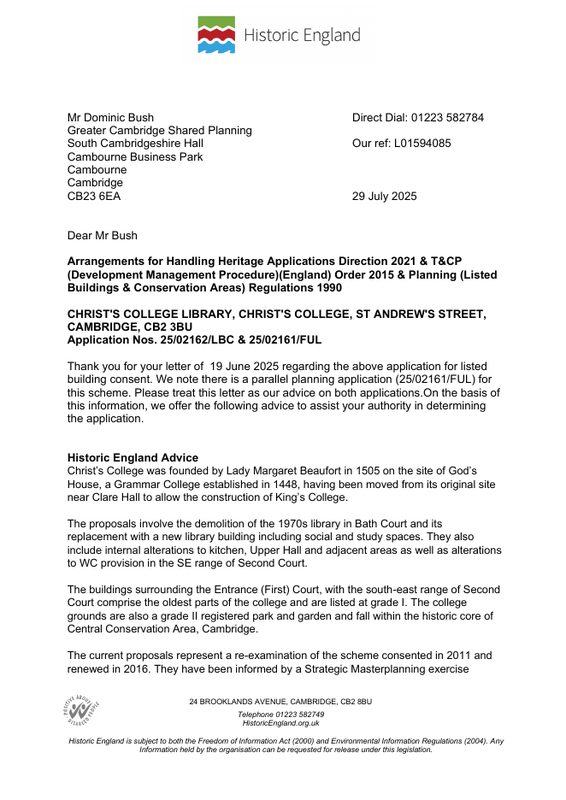
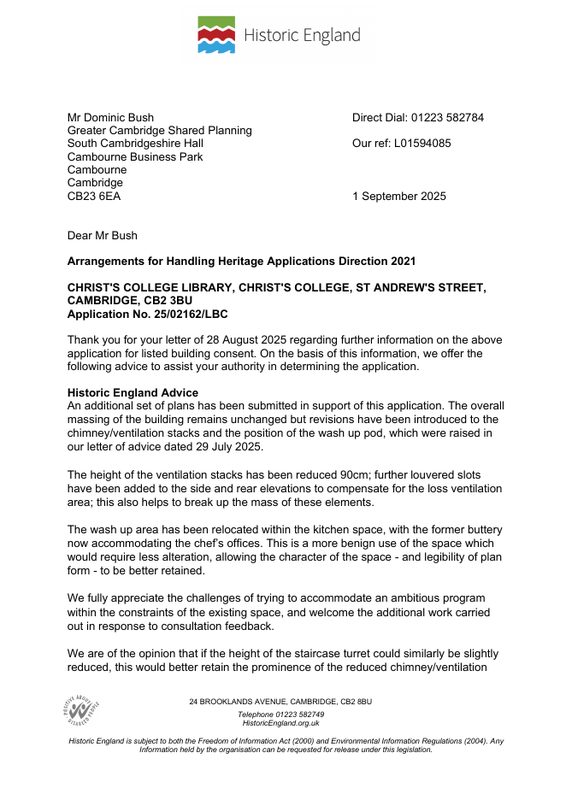
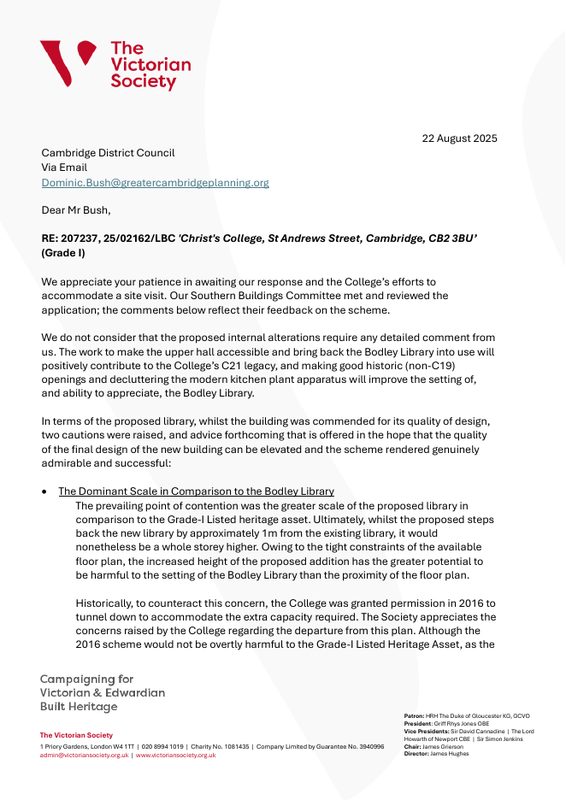
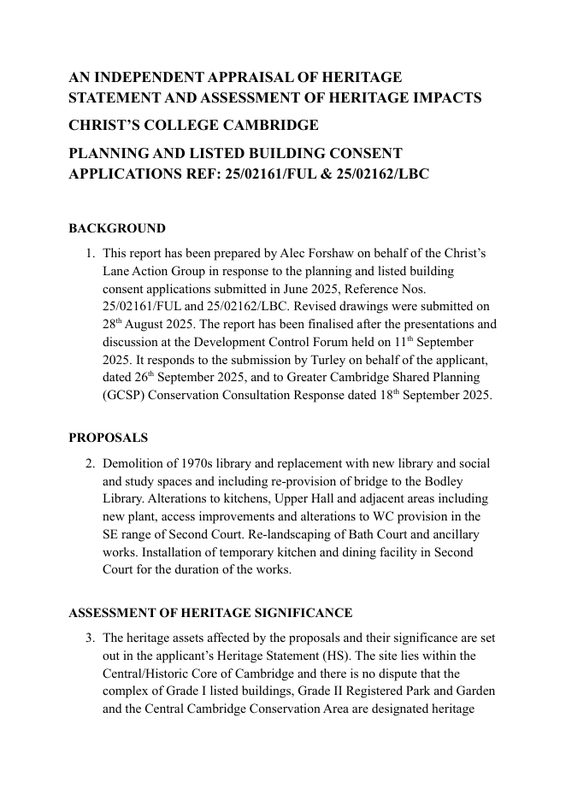
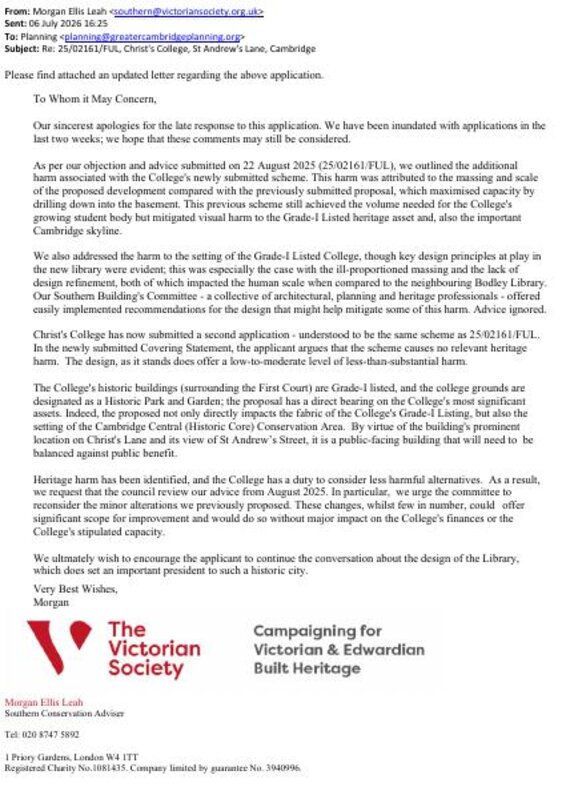
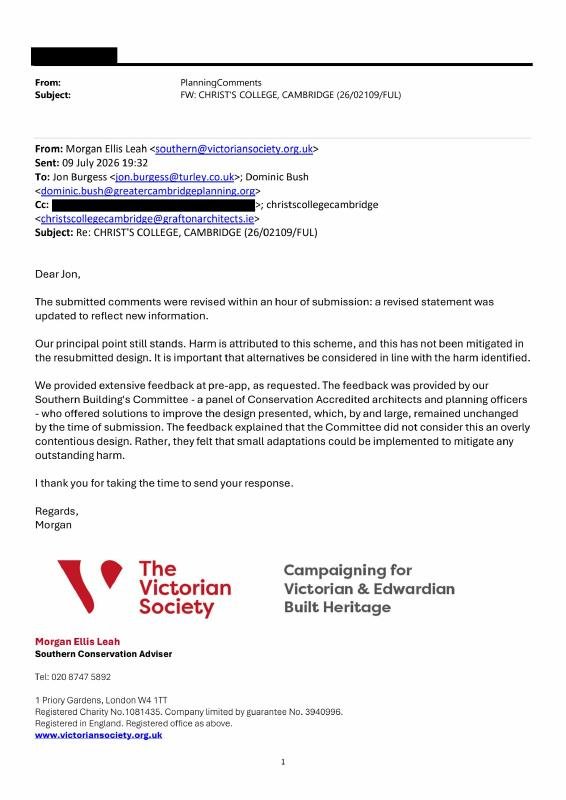
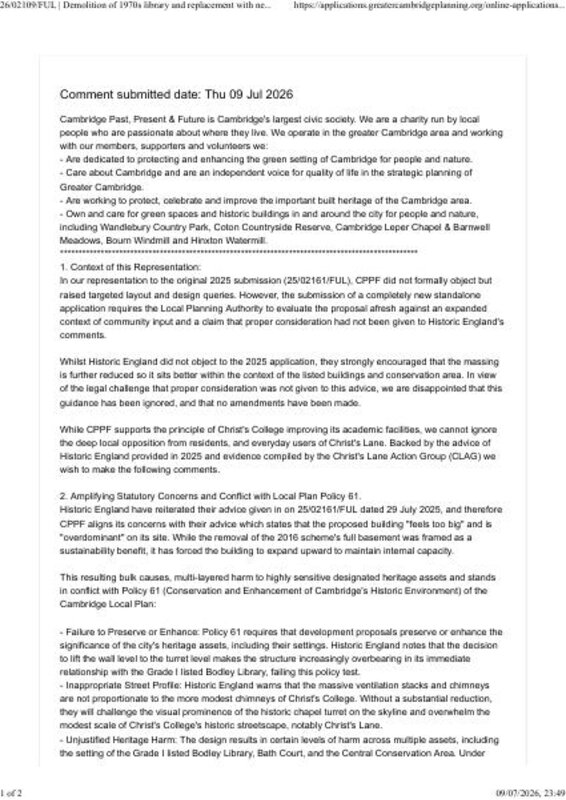
Every expert warns of heritage harm. Historic England, the Victorian Society and Cambridge Past, Present & Future all agree, “too big, overdominant on this space.”
Overwhelms the Bodley. Its “ill-proportioned massing” looms over the Grade I library, blotting out clear views of the gable and turret.
Pedestrians face a dark canyon. A blank wall over 14m high turns 6m wide Christ’s Lane into a daylight-starved corridor.
Token benefits, real losses. A bench and a wrought-iron gate sold as “public benefit,” while the promised green wall vanished.
Lower-harm options dismissed. A lower 2016 scheme was consented; gentler routes remain possible. “Advice ignored,” says the Victorian Society.
They lost, they are back. The first permission was conceded unlawful; the same building is back untouched. Its harm branded a “benefit.”
The Court Case in Plain English
Residents beat a 500-year-old college in the High Court
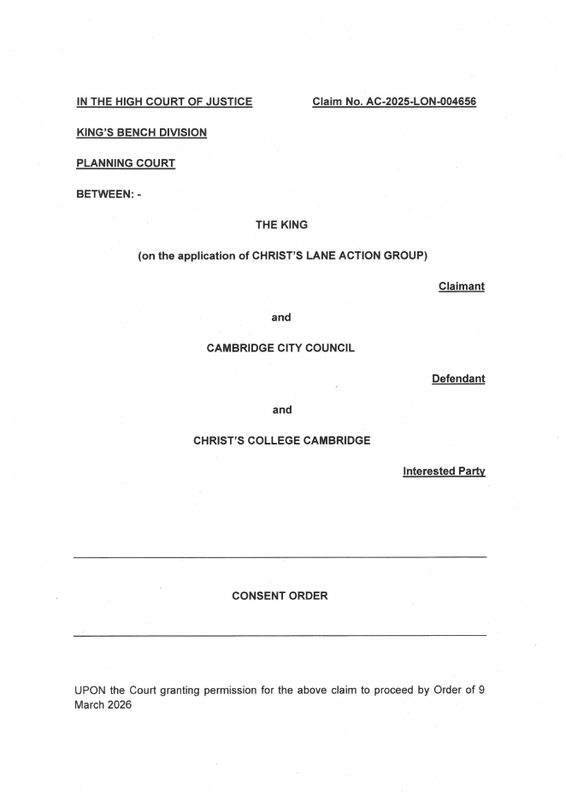
Cambridge City Council and Christ’s College have conceded: the library permission was granted unlawfully, and both have signed in Court to have it quashed.
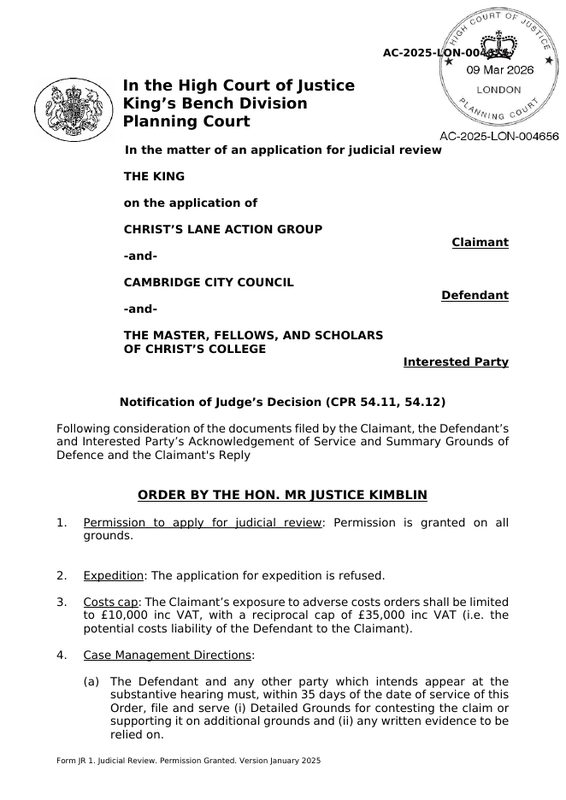
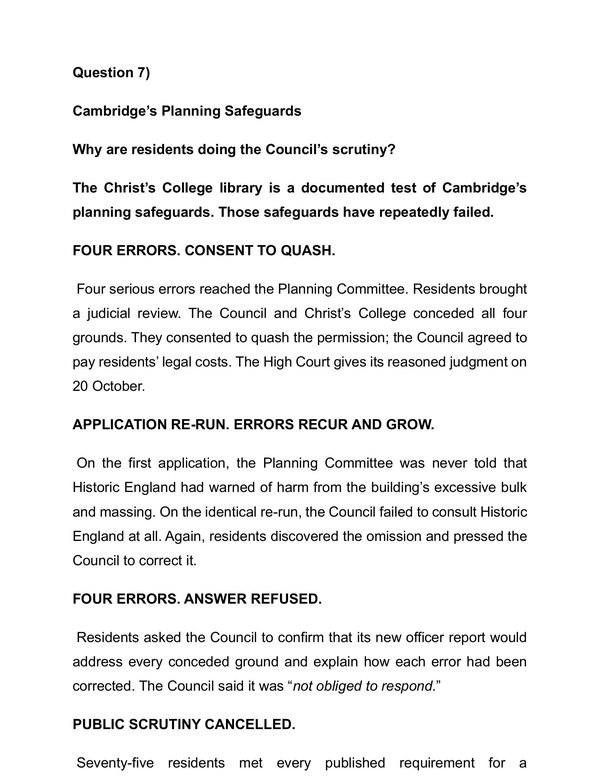
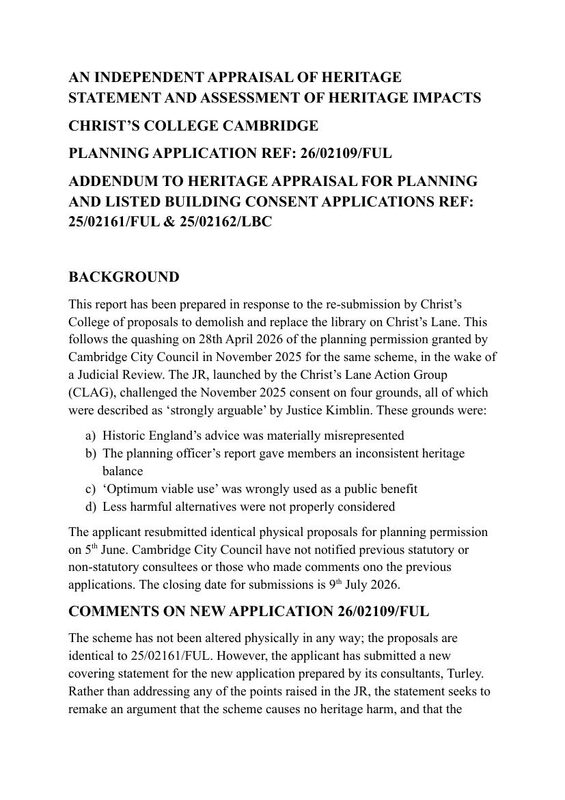
A judicial review (case no. AC-2025-LON-004656) brought by the Christ’s Lane Action Group has forced both the Council and the College onto the back foot. Mr Justice Kimblin granted permission on all four grounds, calling the issues “strongly arguable.” Rather than fight, the Council and the College have consented to the permission being quashed on every ground. The only question left for the High Court on 20 October is how the unlawful decision gets unwound, not whether it was unlawful.
Christ’s Lane Action Group is represented by Emma Dring of Cornerstone Barristers.
Four grounds. All conceded. None defended.
1
Historic England warned of harm. Councillors never heard it. Members were led to believe Historic England saw no heritage harm. The opposite was true: the statutory adviser had identified harm to the setting of the listed buildings. The committee voted on facts that weren’t real.
2
The heritage balance that never balanced. One question decides everything: does the scheme harm heritage, and do the benefits outweigh that harm? The report never answered it. Inconsistent finding of harm. No clear weighing. The most important judgment in the case: muddied.
3
“Optimum viable use”: a benefit that didn’t exist, weighed as if it did. The new library was credited with securing the “optimum viable use” of College buildings that were already in secure, continuous use. A phantom benefit went on the scales and tipped them in the scheme’s favour.
4
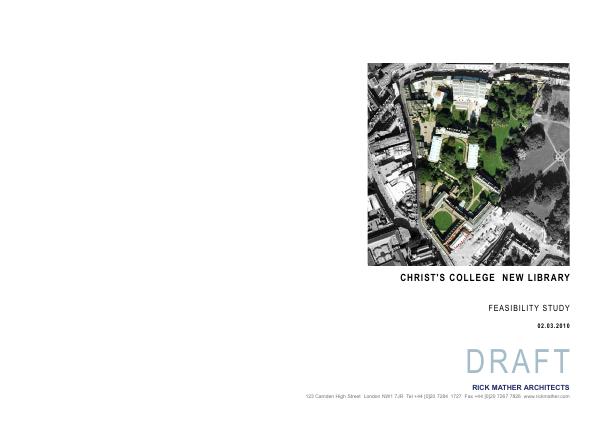
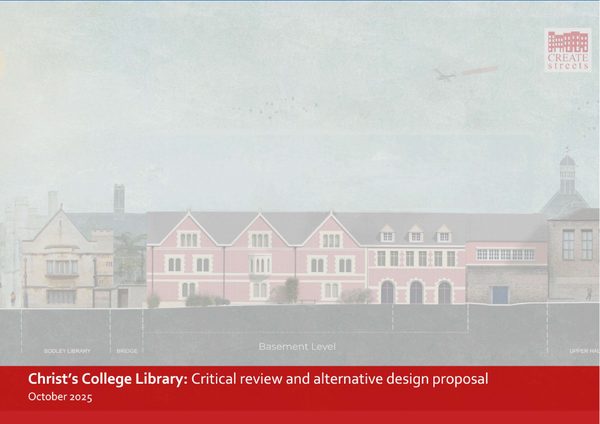
The less harmful alternatives that were disregarded. The College’s own lower-bulk 2016 scheme by Rick Mather already had consent, and a Create Streets illustration shows a lower-impact route is possible. Yet the committee was told not to consider them, and that the oversized scheme was the only way.
The errors conceded, then returned unfixed.
Weeks after signing the consent order, the College resubmitted the same building, with the same four errors, as application 26/02109/FUL. What it now claims about that building, and how it slipped it back to councillors, is set out in The Second Application below.
07 Nov 2025Council grants planning permission
06 Mar 2026Judge Kimblin finds all four JR grounds ‘strongly arguable’
28 Apr 2026College and Council sign Consent Order for first permission to be quashed, based on all four grounds
10 Jun 2026Second application submitted: errors unfixed, harm called benefit
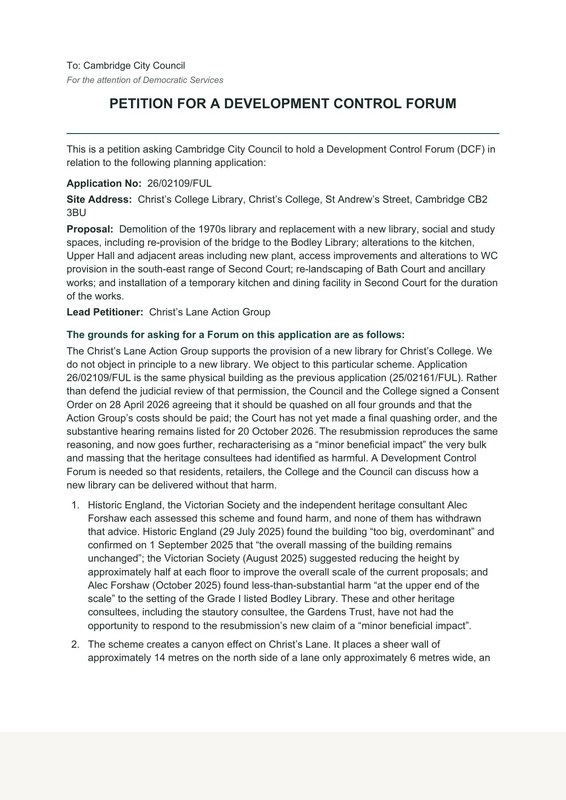
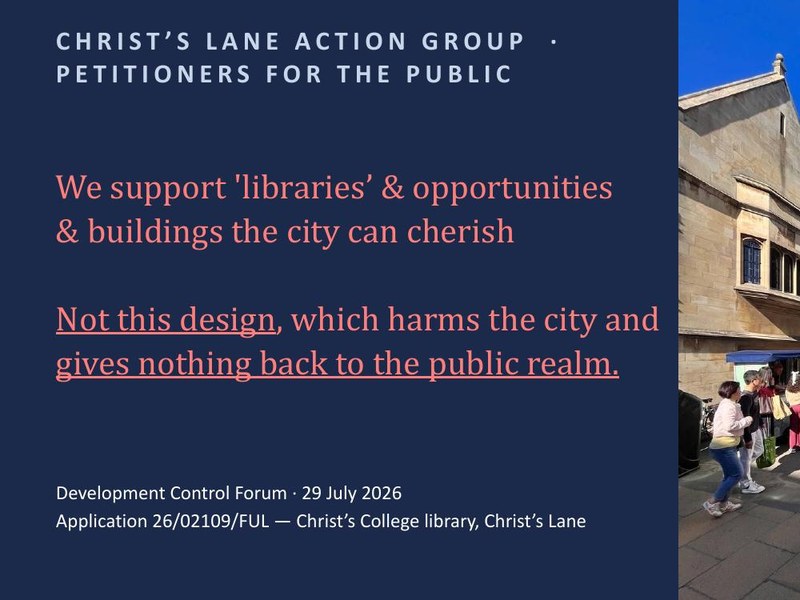
29 Jul 2026Development Control Forum: 75 petitioners put their case to councillors at the Guildhall
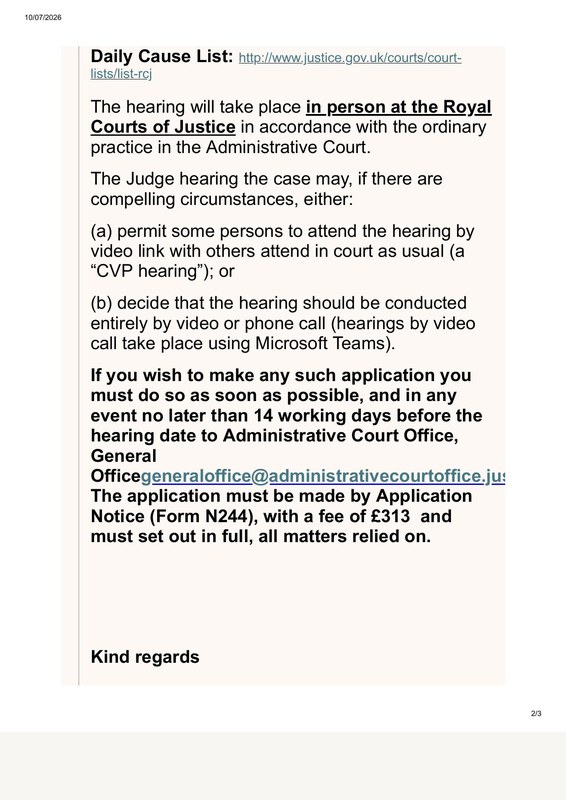
20 Oct 2026Substantive hearing, Planning Court
The legal challenge: AC-2025-LON-004656
Judicial Review: The Record
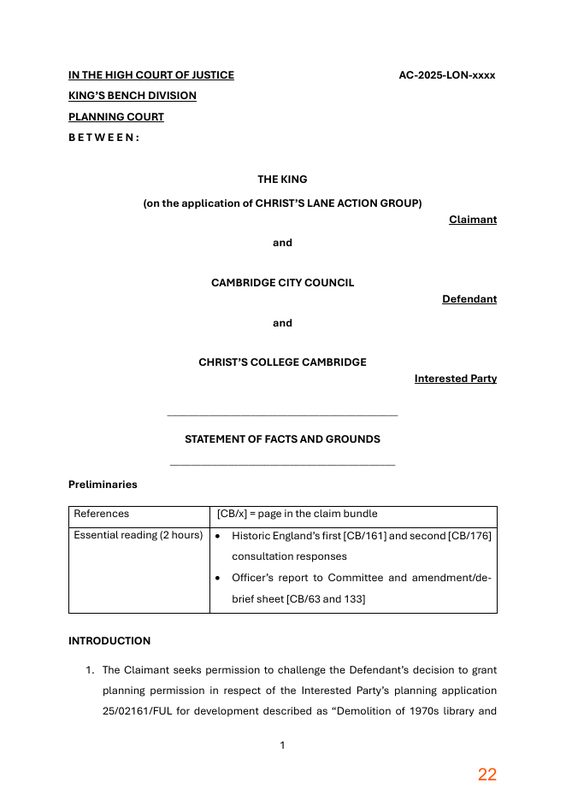
The court documents recording the challenge, the grant of permission, the signed concession and the listed hearing are below.
Having conceded in the High Court that its November 2025 permission was unlawful (see The Court Case in Plain English above), the College resubmitted the same building weeks later as application 26/02109/FUL, with all four conceded errors intact, and the bulk the experts call heritage harm now presented as a heritage benefit.
Here’s the sting. The building may be unchanged… but so are the errors. Historic England called the building “too big” and “overdominant”: heritage harm the College is legally required to offset with public benefits. The College brands that same bulk as a heritage benefit, telling councillors and the public that “the need to apply public benefits to outweigh heritage harms does not… apply here.” Call “harm” a “benefit” and the public is owed nothing in return.
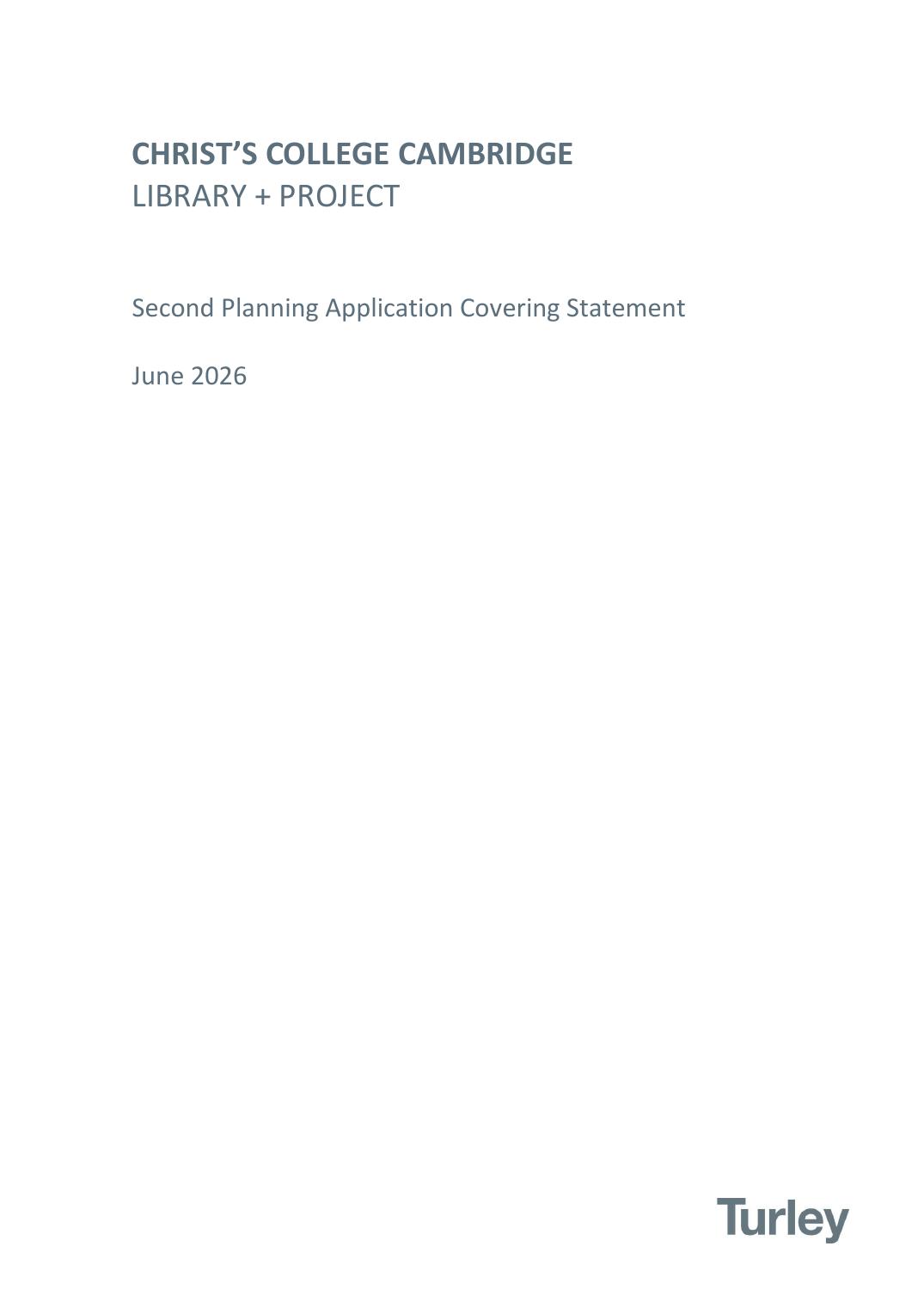
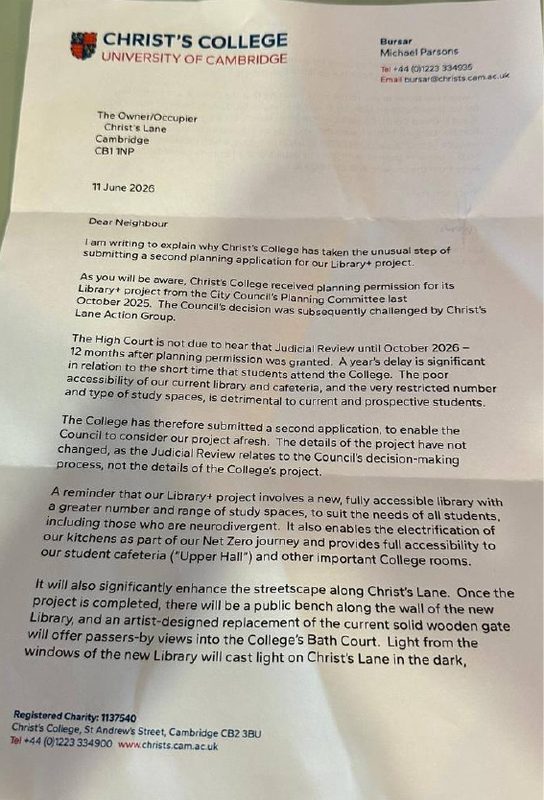
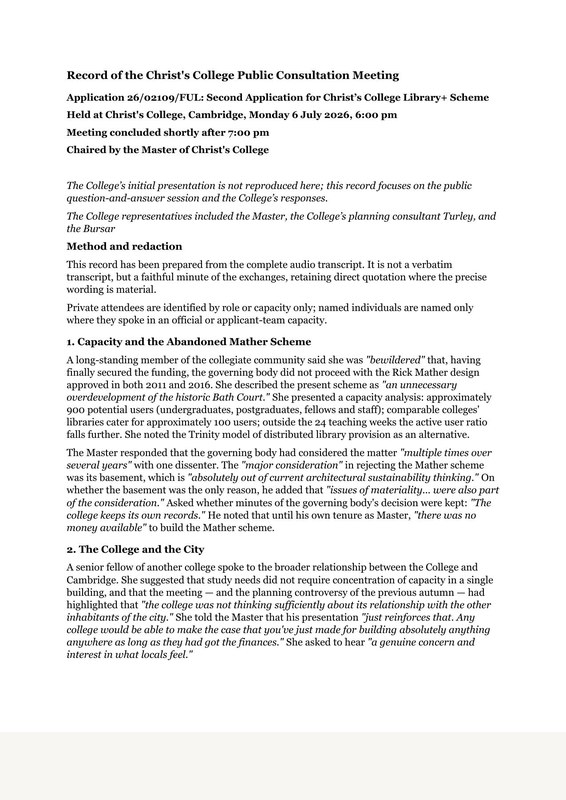
The Bursar wrote to all 42 councillors assuring them the application was unchanged, and did not mention the court order the College had signed weeks earlier conceding its permission was unlawful. And when 75 residents petitioned for the public Forum they are entitled to, the College refused to attend it. Below, the pitch in the College’s own words: the covering statement, the Bursar’s email, the refused request for a public Forum, and the College’s own open meeting.
An organised group of residents forced the College to concede on all four heritage grounds in Court, and its answer is to double down on its errors.
Cambridge’s planning safeguards are meant to catch errors before a decision is made. On the Christ’s College library they have failed repeatedly, and each time it was residents, not the Council, who found the failure and forced its correction. In July 2026 CLAG put that pattern to the Council twice. On 16 July, at Public Questions to Full Council, CLAG asked the one question the Council has not answered: with the High Court due to give its reasoned judgment on 20 October, will the Council agree an extension so the second application is not decided first? And on 29 July, at the Development Control Forum that 75 petitioners secured, CLAG put the College’s own masterplan to councillors as the live, less harmful alternative.
Read it in the experts’ own words. Historic England, the Victorian Society, Cambridge Past, Present & Future and conservation specialist Alec Forshaw each weighed the scheme against its Grade I listed setting, and each reached the same verdict: a building too large for its surroundings, causing real harm to Cambridge’s most sensitive heritage assets.
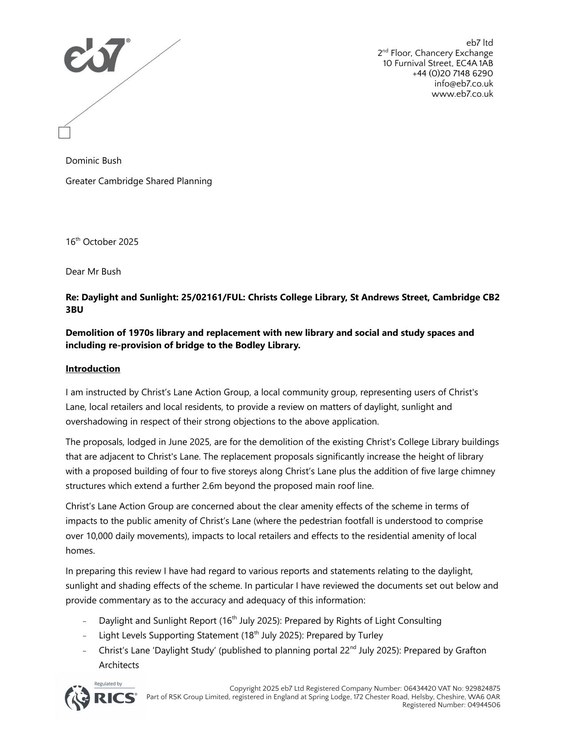
The applicant’s own daylight and sunlight report contradicts the claim that Christ’s Lane would not be overshadowed. Although the applicant’s shading study shows only limited times and angles "favourable to the applicant," eb7’s independent review for CLAG finds it already shows "darker shadows cast across the lane at 6pm on the summer solstice." On the applicant’s own figures, 35 windows serving retail and coffee shops along the lane suffer losses beyond BRE targets, 25 losing more than half their daylight, and four more than 90 per cent.
The case for objecting rests on primary sources, not assertion. The College’s JR Claims Fact Check sets four of the College’s public statements beside the court orders, consultation responses and its own papers they refer to. Every quotation is verbatim, with the original document linked. And after CLAG fact-checked The Observer’s 5 July 2026 column, The Observer corrected its article online; the corrected paragraph and the correction note are reprinted on the page.
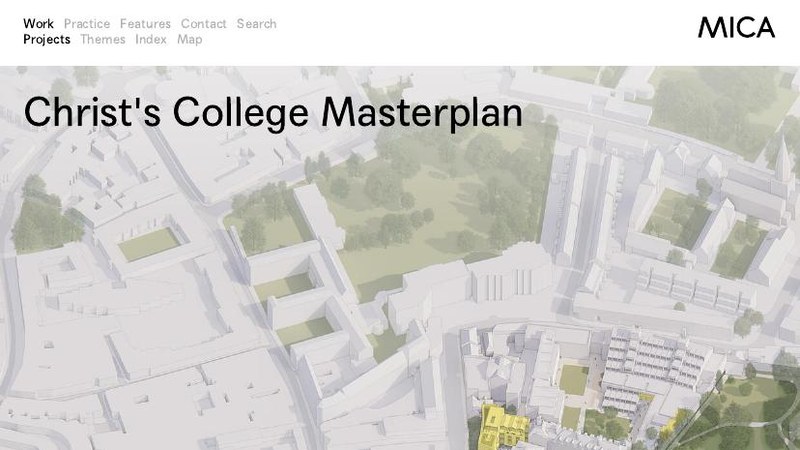
The College’s bulky scheme was never the only option. The law requires that heritage harm be avoided where a gentler design can do the job. The College’s own 2016 scheme by Rick Mather won planning consent and was far more proportionate, and a Create Streets illustration shows a lower-impact route is possible. And the College’s own 2023 masterplan, drawn by MICA Architects and still published on MICA’s website, combines a lower library with distributed study space through rooms the College already holds. The College’s needs met, the heritage harm reduced, the lane left intact.
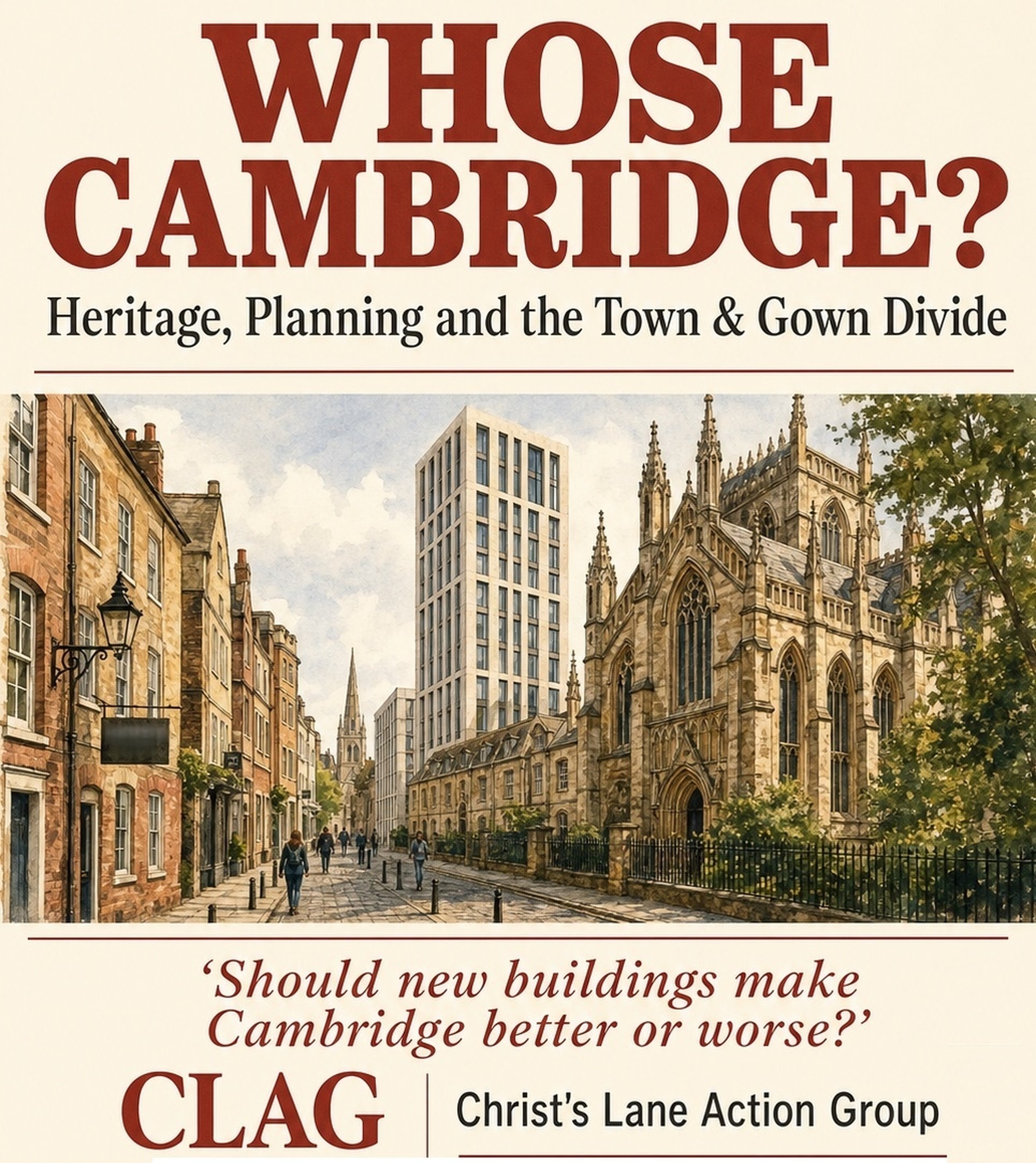
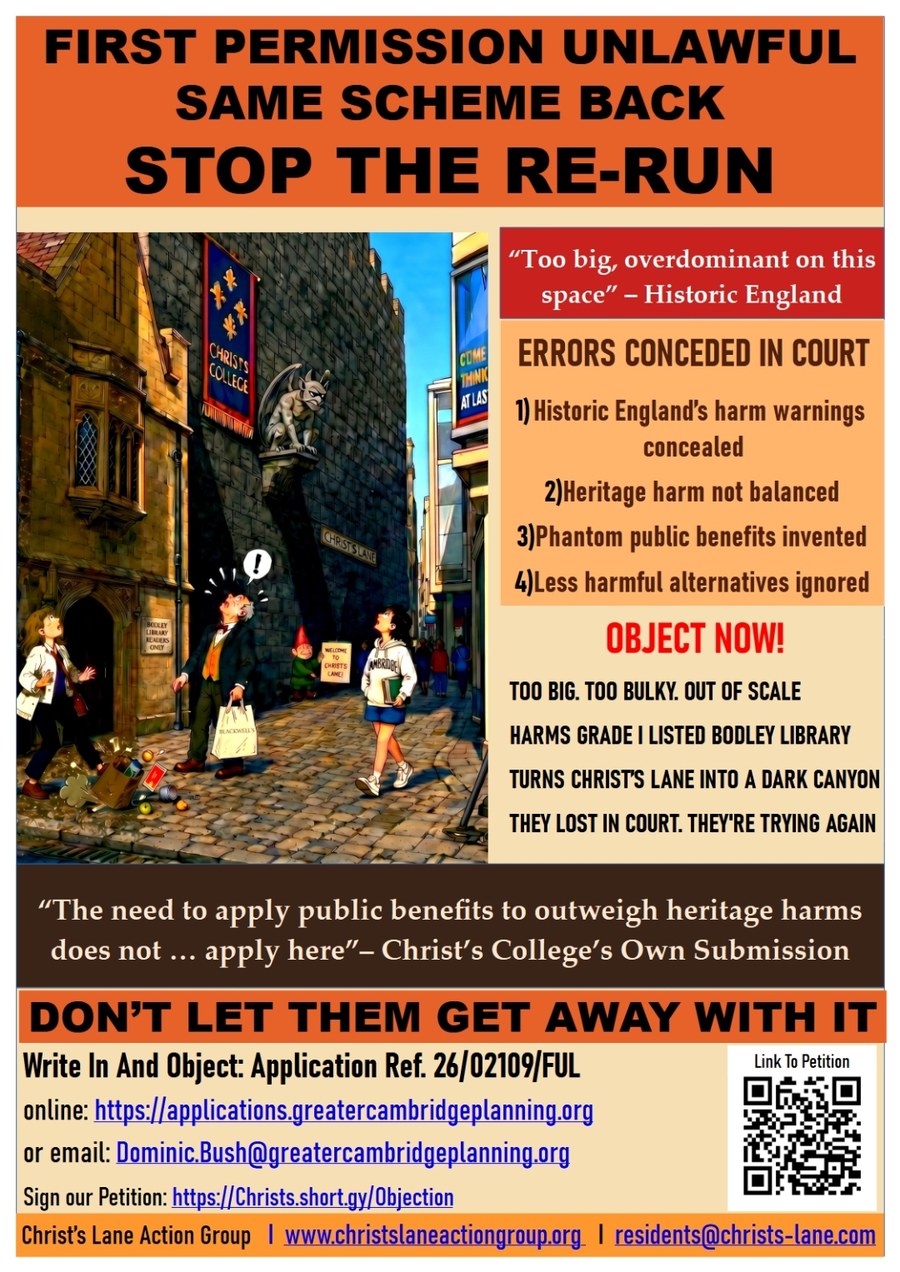
The campaign in its own voice. The posters and flyers below are how residents first told Cambridge what was at stake on Christ’s Lane, plain, public and impossible to miss.
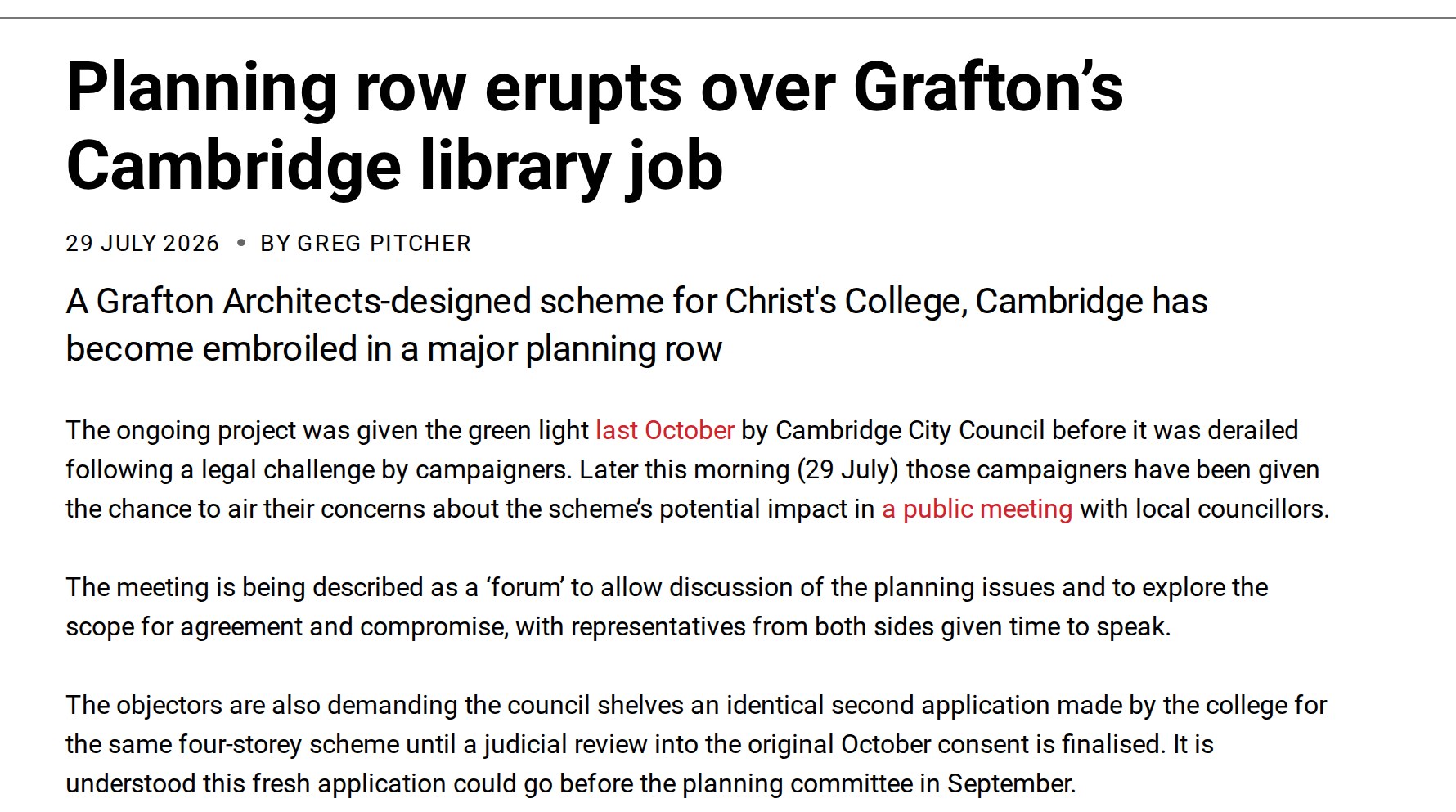
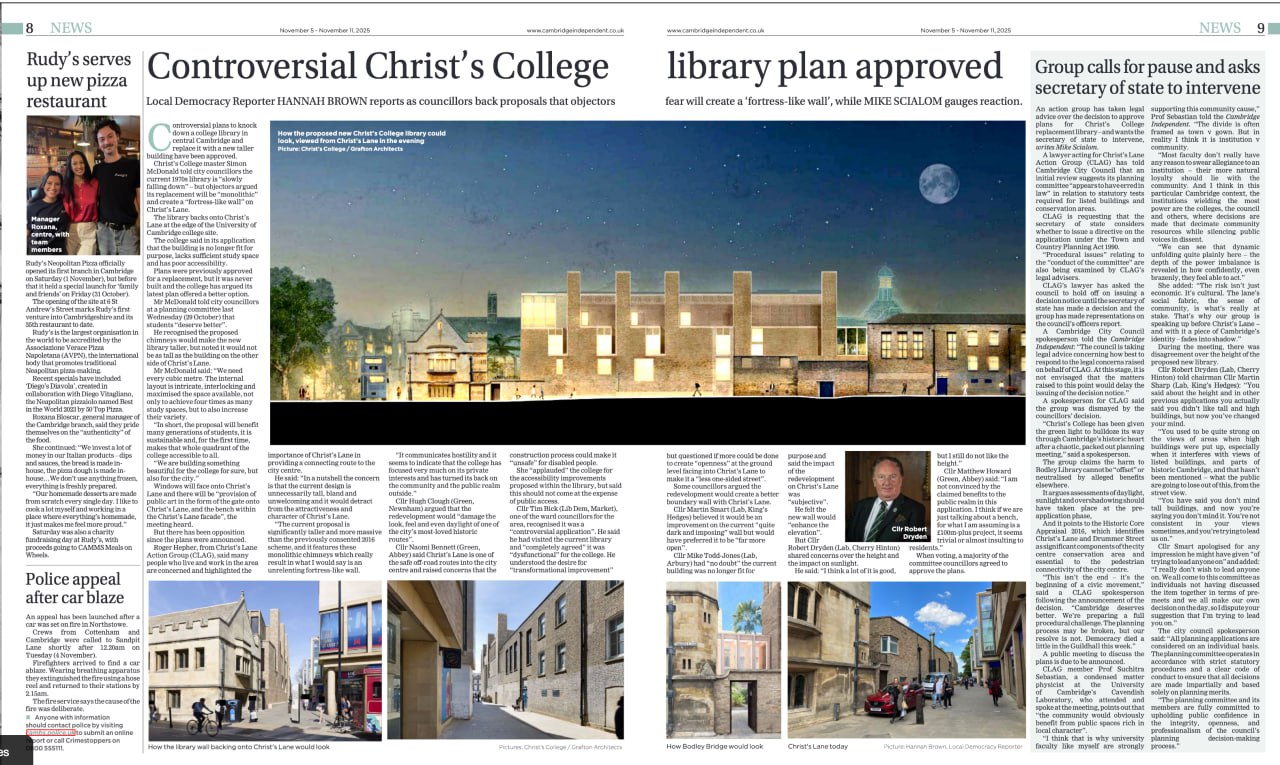
From the BBC to Varsity, the Cambridge Independent to The Critic, the press and the heritage world have been following the fight over Christ’s Lane: the bulk, the canyon it would create, and the disruption to come. Here is a taste of the coverage. And now The Architects’ Journal has taken the row national.
BBC News · 31 October 2025Cambridge college library ‘slowly falling down’Roger Hepher of CLAG calls the design ‘unnecessarily tall, bland and uninviting’ and significantly more massive than the previously approved scheme.
Residents, traders, chartered engineers, planners and conservation professionals all put their names on the record against this scheme. Heritage bodies called it harmful. Here is a glimpse of what they said.
“something out of Mordor”a designer who has worked in Cambridge and London
“more like a tunnel than a lane”a lifelong Cambridge resident
“a private scheme in a public space”a design professional with a Cambridge studio
Further reading
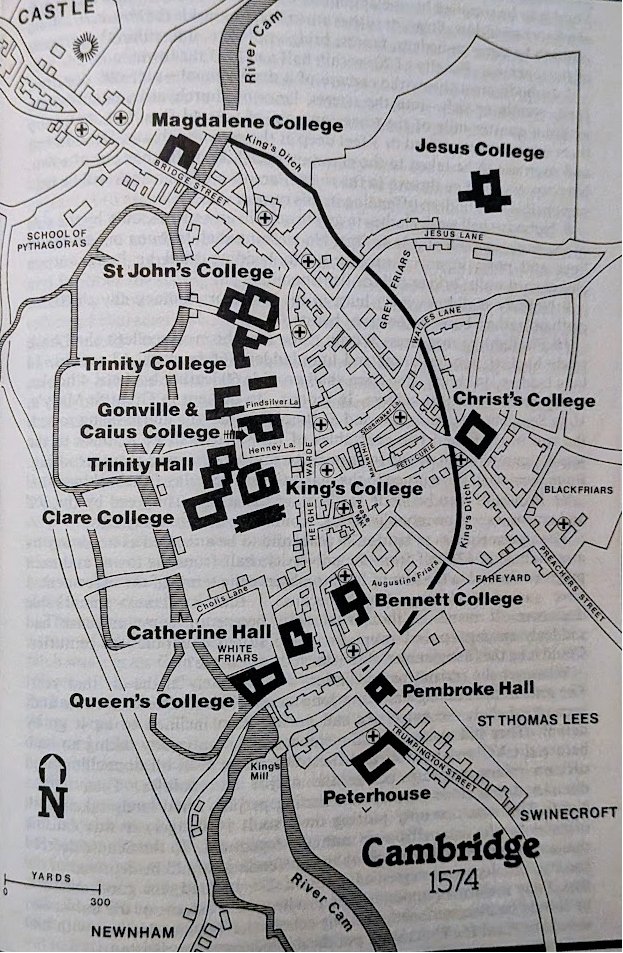
Revisiting the Story of Cambridge
The road to the Cambridge University Corporation Act of 1894, and the long history of the Town & Gown divide over who controls the city’s space. Dr N. Henry, Museum of Cambridge (Feb 2026).
The Christ’s College Library+ scheme: the questions people are asking
The short answers are below. For the full story, Historic England, the Victorian Society, the chimneys, the alternative designs and the economic toll on the Lane, read the complete FAQ.
Why did residents take Christ’s College to the High Court, and what happened?
Residents challenged the Council’s grant of planning permission by judicial review. The High Court granted permission on all four grounds. Rather than defend the decision, both Christ’s College and Cambridge City Council conceded the original permission was unlawful and consented to it being quashed on all four grounds. The case number is AC-2025-LON-004656.
Did Christ’s College resubmit the same scheme after the court ruling?
Yes. Weeks after agreeing the permission should be quashed, the College resubmitted the same scheme as application 26/02109/FUL. The Bursar told all 42 councillors the application is unchanged, but omitted to mention that the College had just conceded the first permission was unlawful.
What was Historic England’s warning about the Christ’s College Library+ scheme?
Historic England found the new building “too big for its location” and “too large for what is a very domestic setting,” causing harm through its “excessive bulk.” Under planning law such heritage harm must be justified by public benefits, yet the College recasts that same bulk as the benefit, so the public is left owed nothing in return.
How do I object to the Christ’s College Library+ scheme?
Object to application 26/02109/FUL on the Greater Cambridge Planning portal, or email the planners quoting reference 26/02109/FUL. Every individual objection is logged and counts.
Take action
Object Now
Same Scheme, Same Harm Called A Benefit: the scheme is back. The Council accepts comments until the application is decided. Make your objection count, quote reference 26/02109/FUL.



 Further reading